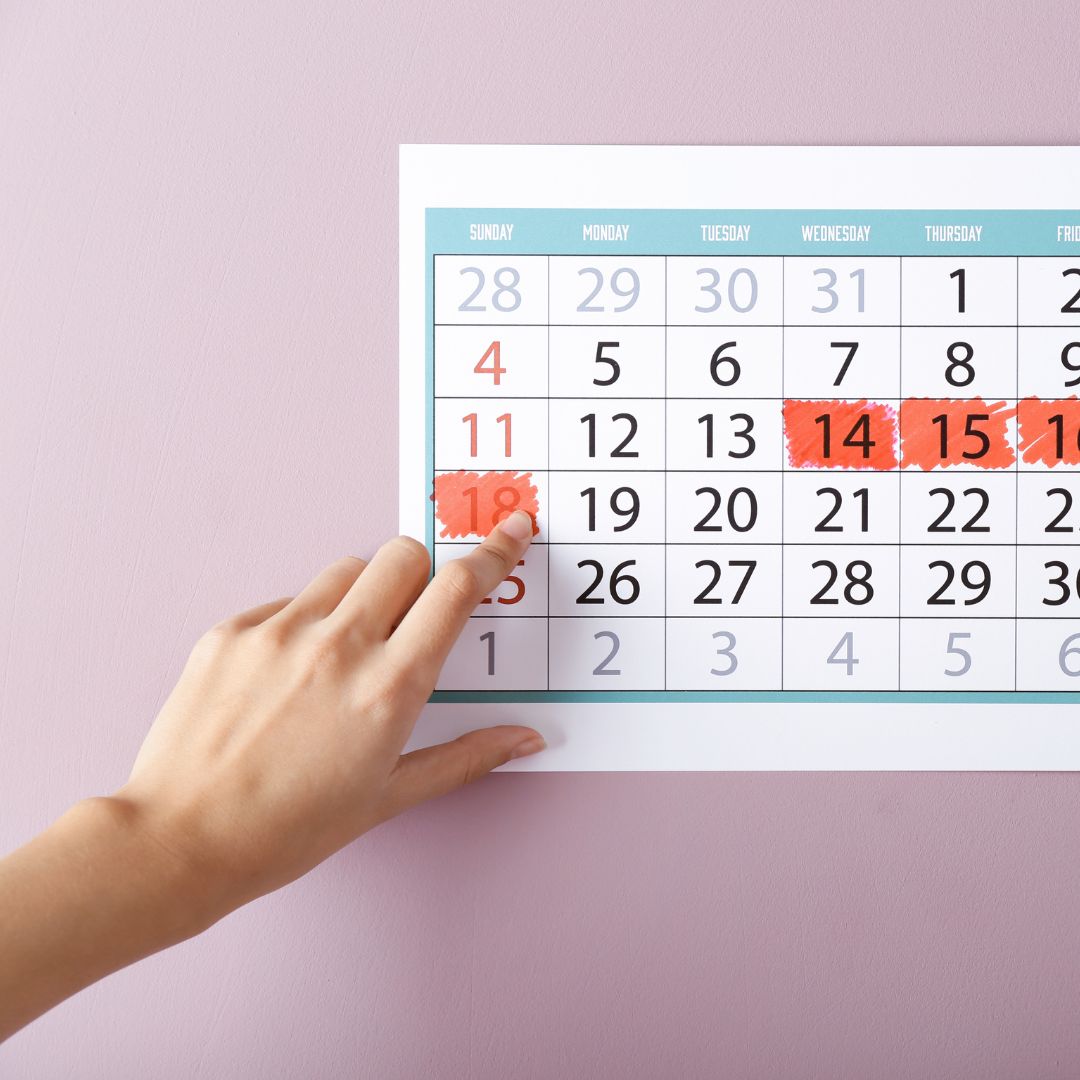



The female cycle is subject to monthly fluctuations. This is completely normal, but it is also one of the reasons why appetite may be slightly greater in the 2nd phase of the cycle and the craving for chocolate & co significantly higher.
But first, let's start from the beginning.
The key factor here is the female sex hormone progesterone. It is closely related to estrogen, as these two hormones complement and reinforce each other. Thus, estrogen is the dominant hormone in the first phase, which builds up the uterine lining, ensures plump, radiant skin, increases self-confidence, and ignites sexual desire together with testosterone. After all, the actual goal of all this monthly fuss is successful fertilization. At least biologically speaking… 👀
After ovulation, progesterone rises, which is accompanied by a body temperature increase of 0.4-0.6 °C and can be wonderfully used to analyze your own cycle. However, this rise in temperature also explains why women feel hungrier during this time. In fact, the energy requirement increases by an average of approx. 100-300 kcal due to the rise in body temperature.

How can nutrition now be adapted to the cycle?
Throughout the cycle, the body has different needs that can be met through nutrition.
The whole thing is not rocket science, and it cannot be thought of in black and white either. A healthy, balanced diet is always good, and the following tips are merely suggestions and not fixed rules.
Very roughly, the cycle can be divided into two halves. The first half includes menstruation, the follicular phase, and ovulation. It begins on day 1 of menstruation and ends with ovulation around day 14. When ovulation takes place varies from woman to woman.
In the second half, women then go through the luteal phase, which usually lasts approx. 14 days.
First half of the cycle: Menstruation, follicular phase, and ovulation
Menstruation and nutrition - Iron, magnesium, healthy fats & vitamin A
Due to blood loss during menstruation, the iron requirement is increased. This applies especially to people who have heavier periods. But not only then… Over 30% of women who are in the perimenopausal phase have an iron deficiency.
Often, a lack of iron intake through diet is also to blame, especially if the iron is taken from plant-based foods. Since the plant-based form of iron can be a little more difficult for the body to absorb.
It is best to consume plenty of vitamin C with iron-rich foods and no coffee or green/black tea, so that the body can absorb the iron better. In case of an iron deficiency, a supplement should also be considered.
With the start of menstruation, menstrual cramps often also set in. So it makes a lot of sense to consume more magnesium during this time. Magnesium can have a beneficial effect on muscle cramps.
In addition, sufficient healthy fats (with the important essential fatty acids) and vitamin A should be consumed to support the liver in breaking down hormones.
Follicular phase and cycle nutrition – Proteins and probiotics
The hormone levels are now rising again, especially those of estrogen. The uterine lining is being built up once again, and the maturation of the egg is now a priority. This naturally puts a lot of demands on the body. How can the body be supported? Through probiotic foods and enough protein.
Probiotic foods can help support the rise of estrogen and FSH and are important for the gut. It can always use some support. Gut health and hormone balance are closely related.
Ovulation and cycle nutrition – Fiber & antioxidants
In addition to a balanced diet, fiber and antioxidants are particularly important now. Fiber is super important, as it can flush excess estrogen out of the body.
This means incorporating a lot of vegetables, fruit (especially berries), legumes, and whole grains into the diet.

Second half of the cycle: Luteal phase
Luteal phase and cycle nutrition
In this phase, many women suffer from PMS symptoms such as painful breasts, mood swings, lack of energy, and co. By the way, these are signs of a hormonal imbalance, as PMS and co are not part of a normal cycle. Read here more about it.
What can be paid attention to in this phase?
Very briefly: Sufficient B vitamins, a stable blood sugar level, balanced meals with proteins, complex carbohydrates, and healthy fats, magnesium & calcium.
Blood sugar level: The well-known cravings and binge eating attacks can be countered with balanced meals that provide enough energy and keep the blood sugar level stable. If the blood sugar level is kept low, binge eating attacks practically have no chance. A stable blood sugar level can be achieved through foods with a low glycemic index and through a balanced combination of complex carbohydrates, protein, and fat.
B vitamins and healthy fats can have a positive effect on the mood, which suffers all too often in this phase. B vitamins are found especially in oatmeal, bananas, legumes, and green leafy vegetables. But also, for example, in balance and reset.
If cramps occur during menstruation, then the magnesium intake can also be increased now as a precaution.
Studies have also shown that supplementation with calcium is particularly effective in women who suffered from symptoms such as depression and fatigue. Correspondingly, another study showed that women with a higher calcium intake developed PMS less often. The reason here could be that calcium supports normal cell function and is involved in the formation of serotonin, which is known as the happiness hormone and mood lifter. In addition, calcium is linked to vitamin D absorption. And here too, it was shown that higher vitamin D levels are associated with a lower probability of developing PMS.
The calming hormone progesterone is particularly well disposed in the 2nd half and takes its task very seriously. This can lead to the muscles relaxing as well, which can result in reduced bowel activity. Raw food may then be tolerated less well, and baked, steamed, or fried foods work better for digestion. Although, of course, every person is different here. It is a matter of trying out what works for you, what is tolerated, or what is not.
By the way, good news! Chocolate is not the enemy. On the contrary! Especially dark chocolate with a high cocoa content and little sugar provides magnesium, fats, and of course satisfaction. And if it should be a little sweeter sometimes, that is also no problem. As the saying goes: the dose makes the poison.

Summary of cycle nutrition:
In the 1st half of the cycle but only after menstruation, raw food tends to be tolerated better, magnesium can help with menstrual pain, fiber flushes excess estrogen out of the body, proteins are important for the build-up of the uterine lining and the maturation of the egg. In addition, the iron loss through menstrual bleeding can be compensated again with iron-rich foods in combination with vitamin C.
In the 2nd half of the cycle digestion can be a little slower, which is why baked, steamed, or fried foods are tolerated better. To counteract cravings, meals should be balanced and the blood sugar level kept stable (mix of enough fat, protein, and complex carbohydrates). In addition, foods with B vitamins can support & brighten the mood. Magnesium can help counteract upcoming cramps, and calcium shows itself to be beneficial in the treatment of PMS symptoms.
1st or 2nd half of the cycle
All the tips are nice and well. But how do I now know whether I am in the first or the second phase of the cycle?
The first half of the cycle starts with the beginning of menstruation and ends with ovulation. Directly after ovulation, the 2nd half starts until menstruation begins.
The beginning of menstruation is quite obvious. But when is the time of ovulation?
By the way, this can only be determined if no hormonal contraception is involved, as this usually completely prevents ovulation.
Temperature measurement
A very good way to determine ovulation is the temperature measurement method. For this, the morning basal temperature is measured with the help of a thermometer. There are various measuring devices on the market. It is important that the thermometer can measure to two decimal places. We can recommend the Daysy cycle computer here.
In the first half of the cycle, i.e., from the start of menstruation until ovulation, the body temperature is lower. At ovulation, it drops briefly once, and in the 2nd half of the cycle, it is then significantly increased (by 0.4-0.6 °C), which also explains the higher energy expenditure.
Cervical mucus
Not every woman wants to measure her body temperature every morning. Instead of or in addition to the temperature measurement method, the consistency of the cervical mucus can be examined. Wash hands, put fingers in the vagina, and then see what the cervical mucus looks like. If it is moist, stretchy, and reminds of the consistency of raw egg white, that is a pretty clear indication of ovulation and fertility. After ovulation, it becomes drier again and is no longer slimy – a sign therefore of the 2nd phase of the cycle.
With the help of a cycle tracker, the time of ovulation can also be predicted. A mix of several methods is best.
Does that sound confusing or do you have questions? Feel free to contact us. Otherwise, we can only say: one step at a time. After all, it is about a lifestyle change and not a radical diet. And small changes can also contribute to well-being.